
Example website: meroli.eu/product
Useful information belongs beside a beautiful image
An evocative photograph can attract attention. But choosing also involves other questions: how long are the sleeves, how does the fabric fall, what does the back look like and how loose is the fit?
A product gallery supports the decision when its images answer different questions. Front, side and back views, together with photographs of the product on its own, can provide a more complete picture.
Meroli: multiple views and a point of reference
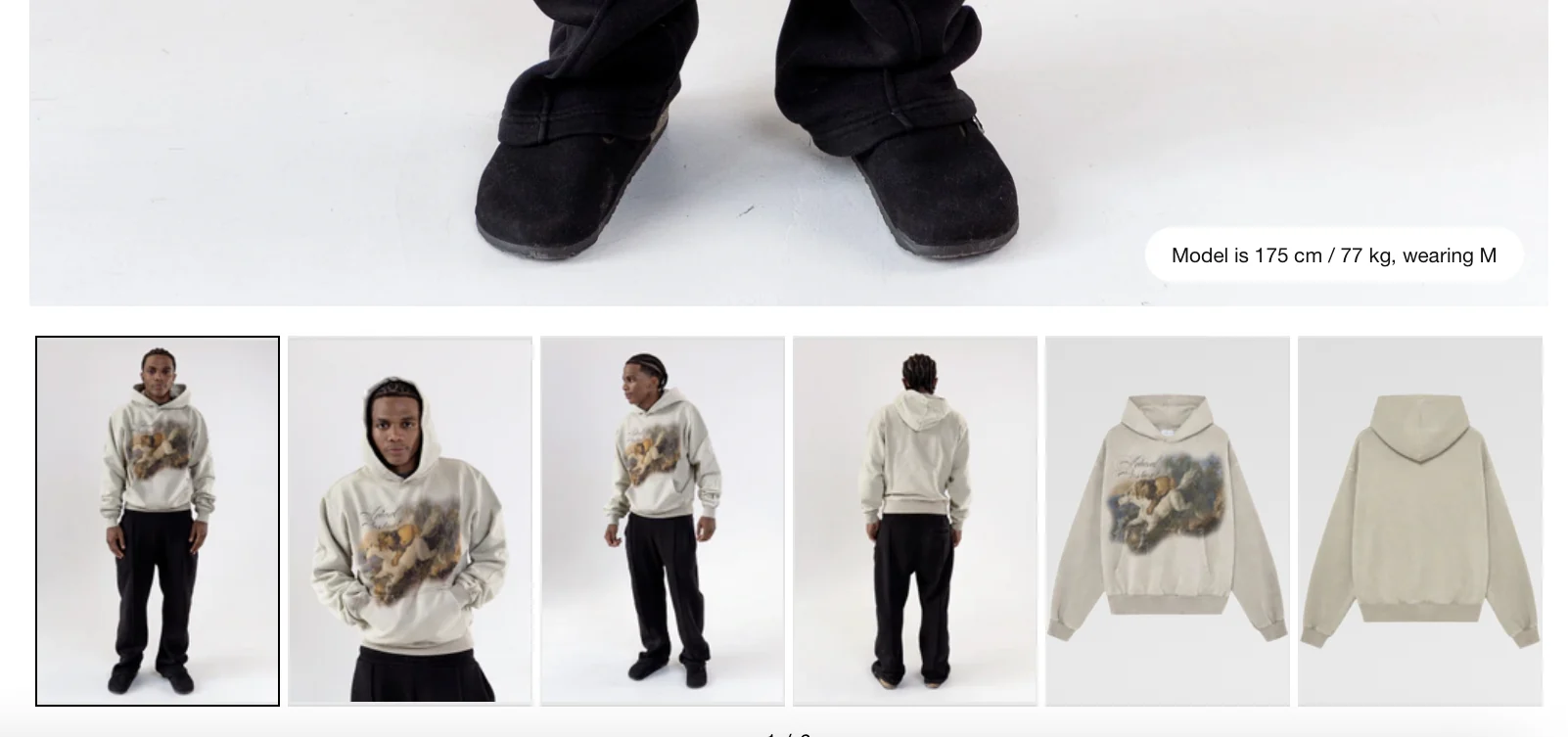
The Meroli example shows model photographs of the sweatshirt alongside front and back product views. Thumbnails preview the available angles, while a border distinguishes the selected image.
The main image also shows the model’s height, weight and worn size: 175 centimetres, 77 kilograms and size M. These specific measurements provide a reference for the fit shown. A product size chart may still be needed to choose the right size.
Specific answers can reduce uncertainty
Fabric composition, a brief fit description, care instructions and a size chart can sit alongside the photographs. This information is easier to use when it is close to the product and size selection.
Credibility also benefits when images and text show the same product, colour variant and details. Customers can compare what they see with what is promised and order with a more accurate expectation.
An informed decision can have effects beyond checkout
Alongside gallery use and basket additions, monitor questions about sizing and reasons for returns. Viewing more images does not in itself mean a more successful journey: it can indicate either interest or uncertainty.
The effect of a new model measurement or detail photograph can be explored through a comparative test. The aim is for customers to understand their choice better and for the delivered product to match their expectations more closely.
The examples reflect the state shown in the accompanying screenshots. This analysis does not include measured conversion results.